Same English.
Different Korean.
Compare related Korean words, follow vocabulary through Hanja roots, and search the built-in dictionary by Korean, English, or Hanja.
Available on iPhone, iPad, Android phones, and Android tablets.
Know which Korean word fits.
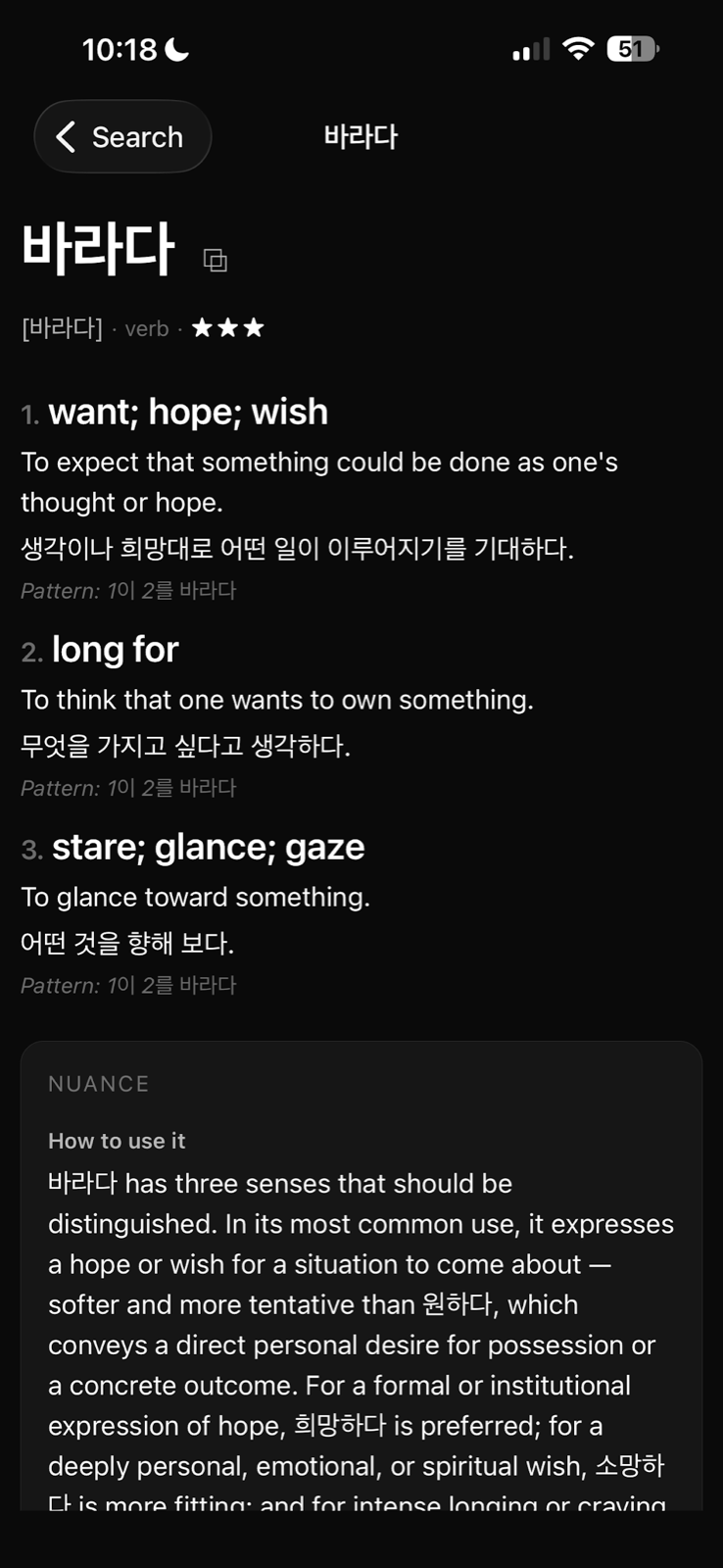
A focused dictionary for the distinctions and word connections that a short translation leaves out.
See the difference between related words
Selected entries include contextual notes, related words, and common combinations to help you choose the word that matches the situation.
- English and Korean definitions together
- Contextual explanations for selected entries
- Related words kept next to the definition
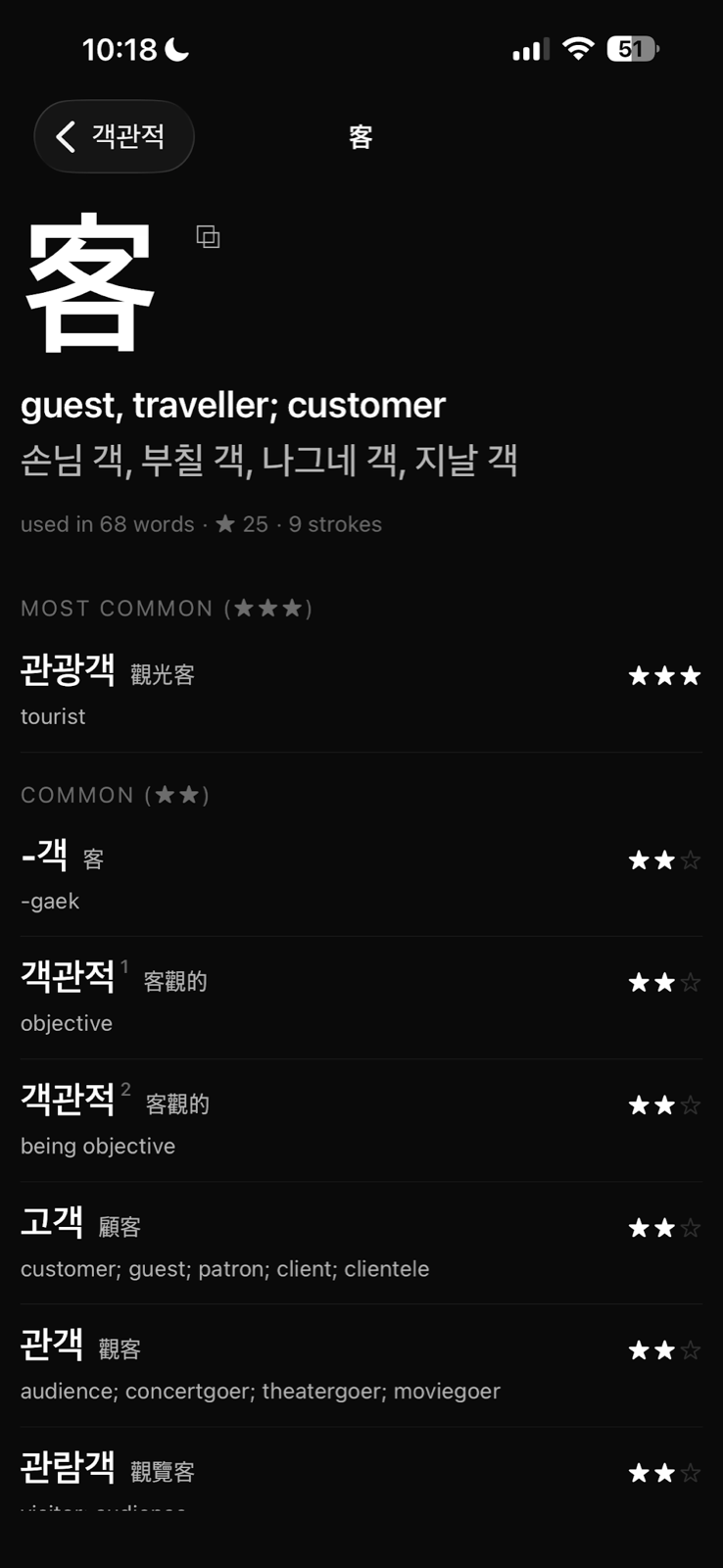
Build word families through Hanja
Open a Hanja character to see its meaning, Korean reading, and the words that share the same root.
- Search by Hanja as well as Korean and English
- Move from a word to its roots and related vocabulary
- See common and less common word families separately
Look up words without a connection
Dictionary content is bundled with the app, so searches and recent-search history stay on your device. No account is required.
Latest word guide
특별히 vs 특히
“especially”: 특별히 or 특히?
Treat them as synonyms here.
Dictionary sources and corrections
Definitions come from the National Institute of Korean Language's Korean-English Learner's Dictionary. Hanja data also uses Unicode Unihan and libhangul sources. AI-assisted contextual notes are prepared before release for selected entries and may contain mistakes.
Report a correction or get support